
Florida Amendment 3: What Homeowners Need to Know About the 2026 Property Tax Proposal
Boca Raton Rich Entel August 16, 2026
Boca Raton Rich Entel August 16, 2026
Florida property taxes are once again at the center of a major statewide debate.
In November 2026, Florida voters will consider Amendment 3, a proposed constitutional amendment that could significantly change how property taxes are calculated for homesteaded and non-homesteaded properties.
For homeowners, the headline is certainly attractive: a substantially larger homestead exemption.
But the proposal is more complicated than simply cutting a homeowner's property-tax bill.
The amendment could also affect local government revenues, public safety funding and the way cities and counties structure taxes and fees. And for South Florida — where second homes, investment properties and high-value real estate make up a significant portion of the market — the implications are particularly worth watching.
https://www.flsenate.gov/Session/Bill/2026F/1F?utm_source=chatgpt.com
If approved, Amendment 3 would increase the homestead exemption applicable to non-school property taxes.
The exemption would increase to:
The amendment would also lower the annual assessment-increase cap on non-homestead properties from 10% to 5%.
That provision could be particularly relevant to owners of:
Importantly, the proposal does not simply eliminate property taxes, nor does the larger exemption apply in the same manner to school-district taxes.
For Florida residents who qualify for homestead exemption, the appeal is easy to understand.
Property values throughout many parts of Florida have risen substantially over the past several years. Even homeowners protected by Florida's existing Save Our Homes assessment cap can face significant property-tax bills.
Increasing the homestead exemption could reduce the taxable value used for certain local-government property taxes and potentially put meaningful money back into homeowners' pockets.
At a time when insurance premiums, association costs, maintenance expenses and the overall cost of homeownership have increased, property-tax relief is understandably appealing.
The debate isn't necessarily over whether Floridians deserve property-tax relief.
The bigger question is what happens to local government revenue after the tax base is reduced.
Police departments, fire rescue, emergency medical services, parks, libraries, roads and numerous other local services depend at least partly on property-tax revenue.
Several Florida public-safety organizations have raised concerns about the amendment because of uncertainty surrounding future funding.
That creates an important question for homeowners:
If property-tax revenue falls significantly, how will cities and counties respond?
They could reduce spending.
But depending on the circumstances, local governments could also look toward other revenue sources, including adjustments to millage rates, assessments or fees.
That is one reason the actual impact on an individual homeowner could ultimately be more complicated than the exemption amount alone suggests.
Amendment 3 has already faced a significant legal challenge.
In August, Leon County Circuit Judge David Frank ruled that the original ballot title and summary were misleading and ordered them rewritten.
The original title — “Save Our Homes From Excessive Property Taxes” — was replaced with the more neutral:
The rewritten summary more directly explains what the amendment would actually change.
That distinction matters.
Voters aren't simply being asked whether they would like lower property taxes. They're being asked to change Florida's Constitution and significantly alter part of the system used to finance local government.
This is where the issue becomes particularly interesting for South Florida homeowners.
Boca Raton and Palm Beach County offer residents a high level of municipal and county services, while the area also contains some of Florida's most valuable residential real estate.
If Amendment 3 passes, local governments throughout Florida will have to evaluate the impact on their individual tax bases and budgets.
The effect won't necessarily be identical from one municipality to another.
A city heavily dependent on property-tax revenue could face a very different situation from a municipality with substantial alternative revenue sources.
For homeowners, therefore, the important question isn't only:
“How much larger will my homestead exemption become?”
It is also:
“How will my city and county respond?”
This is particularly important in the Boca Raton and Delray Beach markets.
Many South Florida properties are not homesteaded because they are second residences, seasonal homes or investment properties.
Amendment 3 includes a potentially significant provision for these owners as well: the annual cap on assessment increases for non-homestead properties would fall from 10% to 5%.
That could provide additional assessment protection for certain non-homestead property owners over time.
It also illustrates why Amendment 3 should not be viewed exclusively as a homestead-exemption proposal.
Potentially.
Property taxes are part of the overall cost of homeownership, and buyers increasingly look beyond the purchase price when evaluating a property.
Today, buyers consider:
Purchase price + property taxes + insurance + HOA or club expenses + maintenance = true cost of ownership.
If Amendment 3 materially reduces property taxes for some primary-residence homeowners, it could make Florida homeownership more attractive at certain price points.
At the same time, buyers will need to understand that a seller's current property-tax bill is rarely a reliable indication of what the buyer will pay after purchasing the property.
That remains especially important in South Florida, where properties may have been owned for many years and benefit from accumulated Save Our Homes protections.
Property-tax relief sounds simple.
Amendment 3 isn't.
There are legitimate arguments for providing homeowners with additional relief as Florida's housing costs have increased.
There are also legitimate questions about how cities and counties will continue funding the services residents expect if a substantial portion of their property-tax base becomes exempt.
For Boca Raton and Palm Beach County homeowners, buyers and sellers, this is an issue worth following closely between now and Election Day.
The most important thing is to understand what the amendment actually does — and what it doesn't do — before November.
At The Entel Group, we believe real estate advice should extend beyond finding the right property. Understanding taxes, community costs, club expenses and the overall economics of ownership is an important part of making an informed real estate decision.
The Entel Group
Private Club Access. Private Client Advisory. One expert. Every top club.
This article is provided for general informational purposes only and should not be considered legal, tax or voting advice. Property owners should consult qualified tax or legal professionals regarding their individual circumstances.

Boca Raton Country Club Real Estate
A compelling private-club option for buyers living outside a country club — or waiting for golf access at another community.

Boca Raton Country Club Real Estate
What Buyers Need to Know About 54 Holes of Golf, Current Membership Costs, Club Improvements and Homes in Hunters Run
poloclub
What Buyers Need to Know About the $400,000 Full Golf Joining Fee, Annual Dues, Golf Waitlist and Addison Reserve Lifestyle

Boca Raton
Inside Mizner Country Club: 2026 Joining Fees, Dues, Golf & Homes

Boca Raton
We Don’t Just Sell Boca West. We Live Here.
Boca Raton
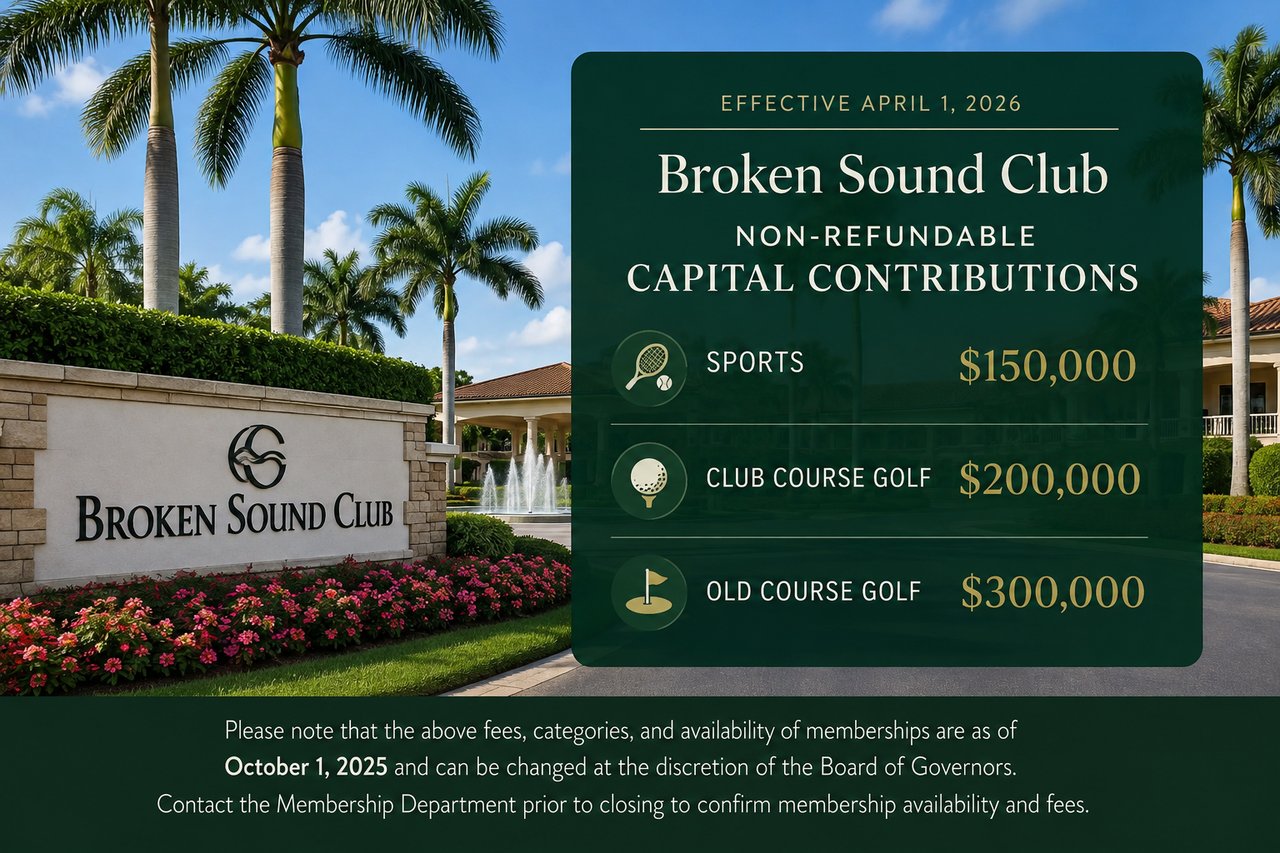
What Boca Raton buyers need to know about the golf waitlist, membership access and current capital contributions.

Boca Raton
The same $1 million home budget can create dramatically different total costs once membership fees, annual dues and lifestyle are added.
Boca Raton
Property tax relief sounds appealing, but the proposed amendment could have broader implications for homeowners, second-home owners and communities across Florida.
Discover the power of collaborating with an experienced team that understands the market inside out. Elevate your success today!