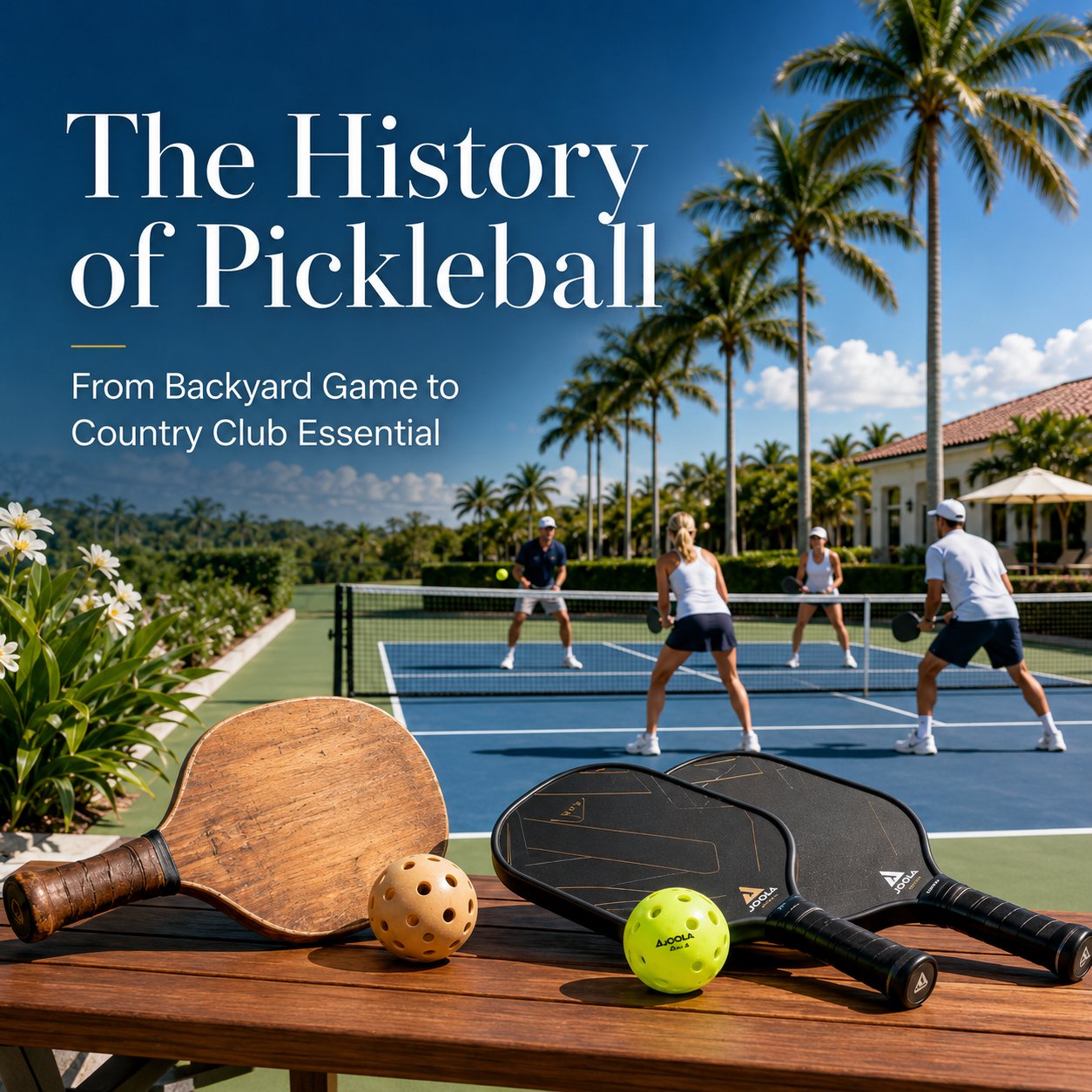
The History of Pickleball From Backyard Game to Country Club Essential
Boca Raton Country Club Real Estate Rich Entel August 3, 2026
Boca Raton Country Club Real Estate Rich Entel August 3, 2026
By Rich Entel | The Entel Group at Compass
Discover how pickleball grew from a backyard game created in 1965 into one of America’s most popular sports—and a major part of country club living.
Pickleball may feel like a modern phenomenon, but its story began more than 60 years ago with a few families, some improvised equipment and a quiet summer afternoon.
What started as a simple backyard activity has become one of the most important amenities in active communities and private country clubs throughout Boca Raton, Delray Beach and South Florida.
Pickleball was created during the summer of 1965 on Bainbridge Island, Washington.
Joel Pritchard and Bill Bell returned from a round of golf to find their families looking for something to do. They headed to an existing badminton court and began experimenting with table-tennis paddles, a perforated plastic ball and a badminton net.
The original paddles began breaking, so the men made sturdier wooden versions. Their neighbor, Barney McCallum, soon joined them and helped develop the equipment and rules that would eventually define the game.
The goal was not to create a professional sport. It was simply to invent a game that the entire family could enjoy.
That accessibility remains one of pickleball’s greatest strengths today.
One of the most frequently repeated stories is that pickleball was named after the Pritchard family’s dog, Pickles.
According to research published by USA Pickleball, however, the game was actually named before the family owned the dog.
Joan Pritchard reportedly suggested “pickle ball” because the new activity combined pieces of several different sports. It reminded her of a “pickle boat” in rowing—a crew made up of leftover rowers from different teams. The family’s dog, Pickles, arrived several years later and was likely named after the game rather than the other way around.
The dog story may be more memorable, but the rowing explanation is now considered the more historically supported version.
As more friends and neighbors began playing, the founders refined the rules.
Barney McCallum played a particularly important role in establishing features such as the non-volley zone—better known today as “the kitchen”—and the double-bounce rule. These rules helped slow the game down, encourage longer rallies and create the strategic style of play people recognize today.
In 1968, the founders formed Pickle Ball, Inc. to manufacture equipment and promote the sport. Early paddles were made from plywood, a far cry from the lightweight carbon-fiber and composite paddles used by many players today.
Pickleball gradually spread through schools, recreation centers, retirement communities and neighborhood parks. What was once a regional pastime slowly became a national sport.
Pickleball combines elements of tennis, badminton and table tennis. It is played on a badminton-sized court with a slightly lower net, solid paddles and a perforated plastic ball. It can be played as singles or doubles, although doubles is especially popular in private clubs and social communities.
Several qualities helped fuel its extraordinary growth:
New players can understand the basic rules quickly and begin participating without years of instruction.
Most games are played as doubles, creating a naturally social environment. Open play, leagues, clinics and round-robin events make it easy for residents to meet one another.
While pickleball initially became especially popular among older adults, the game now attracts families, younger competitors, former tennis players and professional athletes.
The game may be easy to learn, but it is difficult to master. Advanced players use positioning, patience, spin, speed and carefully placed shots to control the court.
Pickleball’s growth accelerated dramatically during the 21st century.
USA Pickleball was formed in 2005 to promote the sport, maintain official rules, sanction tournaments and support its growing community.
By 2026, USA Pickleball reported that more than 24.3 million people were playing nationwide and that participation had increased by 171% over three years. The organization also reported more than 18,000 playing locations and over 82,000 known courts across the country.
Professional tours, national championships, televised events, sponsorships and dedicated pickleball facilities have helped transform the game from a backyard pastime into a mainstream sport.
Florida has played an important role in that growth. The US Open Pickleball Championships began in Naples and celebrated its tenth anniversary in 2026, drawing players and fans from around the country and the world.
In Boca Raton and throughout Palm Beach County, pickleball has become much more than an additional recreational option.
It is now an important lifestyle amenity.
Private clubs have added dedicated courts, covered facilities, stadium seating, professional instruction, leagues, tournaments and social events. For many buyers, the quality of a community’s pickleball program is becoming nearly as important as golf, tennis, fitness, dining and resort-style pools.
That matters when choosing a home.
A buyer is not simply comparing bedrooms, bathrooms and square footage. They are also deciding how they want to spend their mornings, where they will meet friends and what kind of community they want to join.
Pickleball provides exercise, competition and social connection in one experience—which is exactly why it fits so naturally into the South Florida country club lifestyle.
Pickleball has come a long way from wooden paddles and an improvised backyard court.
Today, it includes professional athletes, national tournaments, sophisticated equipment and world-class facilities. Yet the heart of the game remains remarkably close to its original purpose.
It brings people together.
Whether you are playing your first recreational match or competing in a club championship, pickleball offers something that has become increasingly valuable: activity, community and fun.
And in Boca Raton’s finest private clubs, it is no longer simply a trend.
It has become part of the lifestyle.
Every private club offers a different combination of pickleball, golf, tennis, dining, wellness and social activities. Understanding those differences is essential before purchasing a home and committing to a membership.
The Entel Group provides private-club real estate knowledge and personalized guidance to buyers and sellers throughout Boca Raton, Delray Beach and the surrounding Palm Beaches.
The Entel Group at Compass
Private Club Access. Private Client Advisory. One Expert. Every Top Club.

Boca Raton Country Club Real Estate
A compelling private-club option for buyers living outside a country club — or waiting for golf access at another community.
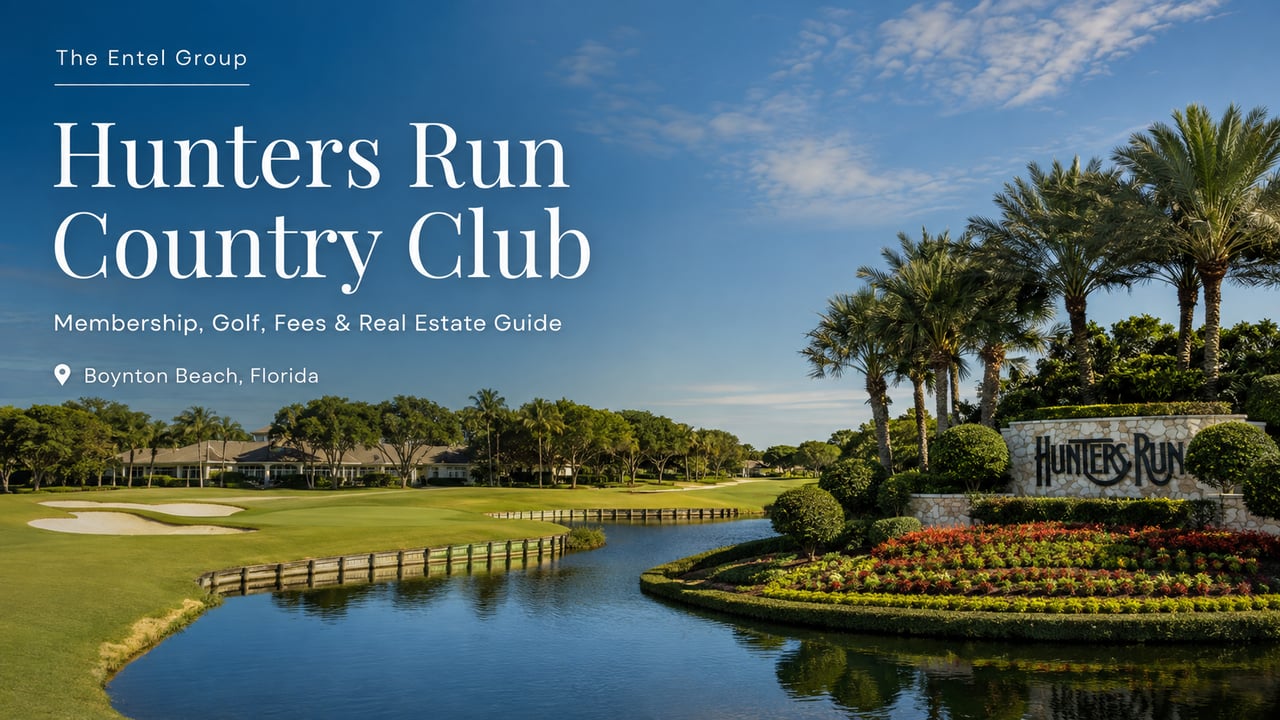
Boca Raton Country Club Real Estate
What Buyers Need to Know About 54 Holes of Golf, Current Membership Costs, Club Improvements and Homes in Hunters Run
poloclub
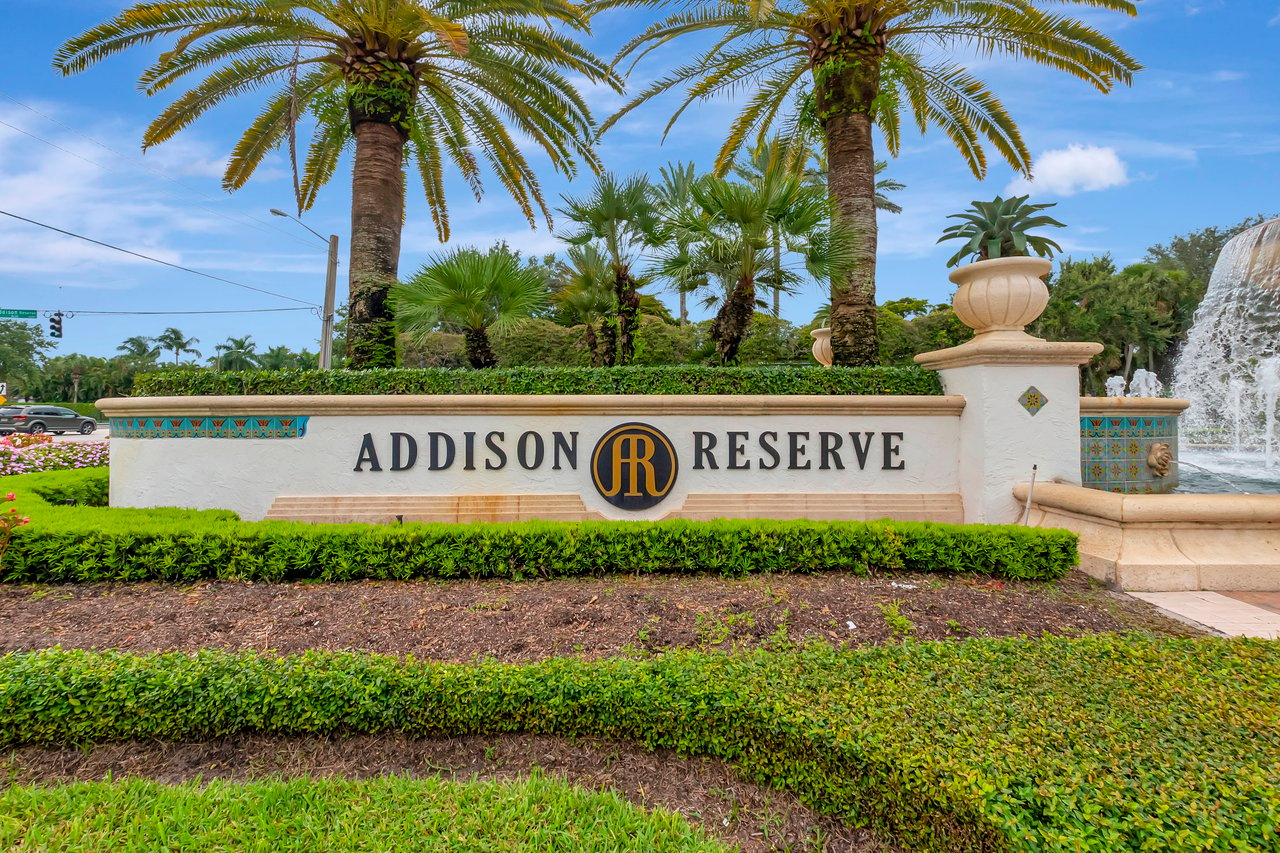
What Buyers Need to Know About the $400,000 Full Golf Joining Fee, Annual Dues, Golf Waitlist and Addison Reserve Lifestyle

Boca Raton
Inside Mizner Country Club: 2026 Joining Fees, Dues, Golf & Homes
Boca Raton
We Don’t Just Sell Boca West. We Live Here.
Boca Raton
What Boca Raton buyers need to know about the golf waitlist, membership access and current capital contributions.

Boca Raton
The same $1 million home budget can create dramatically different total costs once membership fees, annual dues and lifestyle are added.

Boca Raton
Property tax relief sounds appealing, but the proposed amendment could have broader implications for homeowners, second-home owners and communities across Florida.
Discover the power of collaborating with an experienced team that understands the market inside out. Elevate your success today!